You hit a paywall. Here’s the context on this topic based on publicly available information. We did not access any paywalled content. View original article.
Former KMT Leader Urges Mutual Trust with China
- Hung Hsiu-chu highlighted the 1992 consensus as a key framework for improving cross-strait relations, which acknowledges one China while allowing differing interpretations.
- Her social media post was timed just before the current KMT chairwoman's planned visit to mainland China, underscoring ongoing efforts to ease tensions.
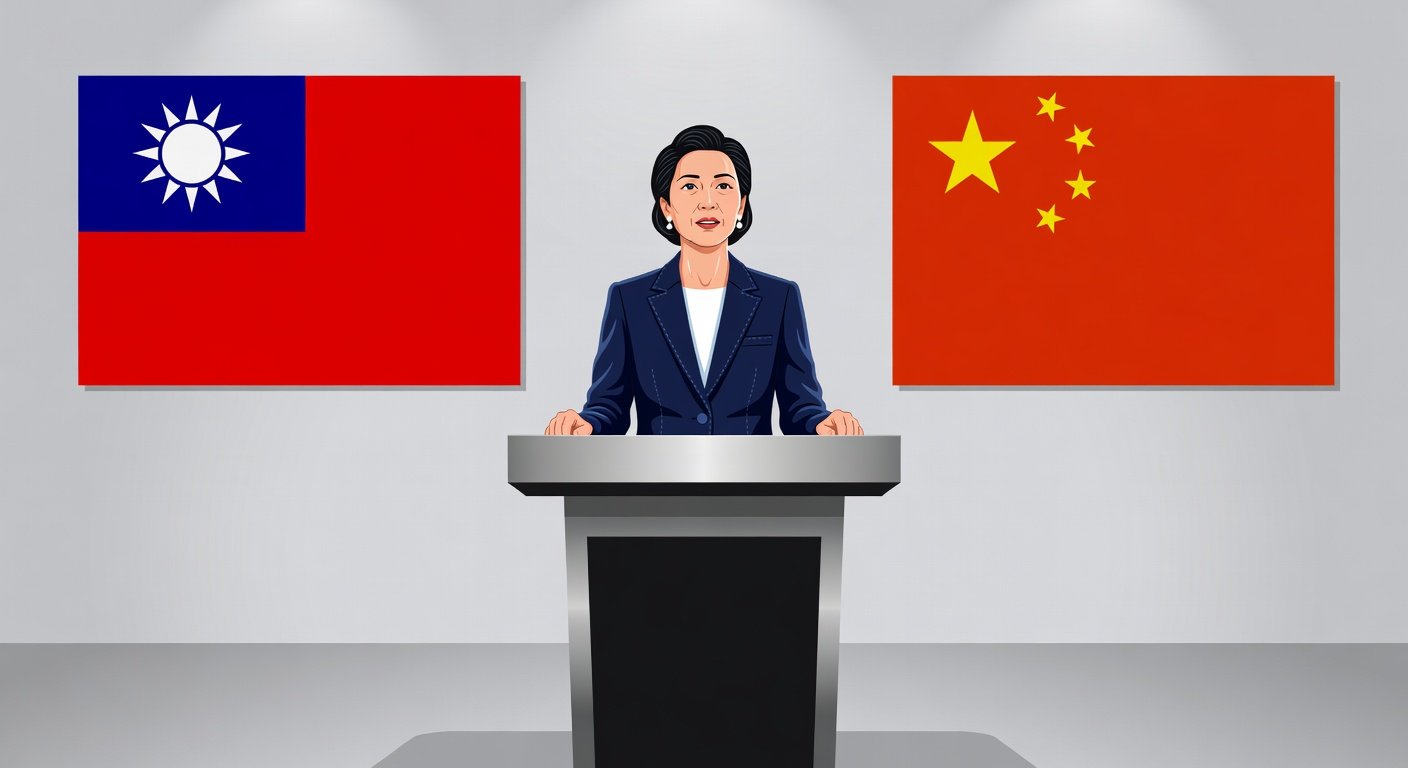
Former KMT chairwoman calls for ‘profound mutual trust’ with mainland China · Image: Grok AI
Full Summary — powered by AI
In a recent social media statement, former Kuomintang (KMT) chairwoman Hung Hsiu-chu advocated for deeper mutual trust between Taiwan and mainland China as a means to foster peaceful relations. She stressed the importance of moving away from confrontation and returning to established principles that could stabilize the two sides. This call comes amid heightened sensitivities in cross-strait dynamics, where political rhetoric often influences broader regional stability.
The 1992 consensus, an unofficial understanding reached between Beijing and the KMT in Taiwan, has long served as a reference point for discussions on unification and autonomy. Under this framework, both sides recognize a single Chinese entity but differ on its definition, allowing for dialogue without immediate resolution of sovereignty disputes. Hung’s remarks reflect a strand of thought within the KMT that favors engagement over isolation, especially as Taiwan navigates its international relations and economic ties with China. This approach matters because it could influence future interactions, potentially reducing the risk of escalation in the Taiwan Strait, a flashpoint that affects global trade routes and U.S.-China relations.
Overall, such statements highlight the delicate balance Taiwan maintains in its foreign policy, emphasizing the need for careful diplomacy to address longstanding historical grievances and current geopolitical pressures. As cross-strait visits and communications continue, perspectives like Hung’s may play a role in shaping outcomes that promote stability in East Asia.
Read More (Free Sources)
- Former KMT Leader Urges Mutual Trust with China — AP News — AP News
- Former KMT Leader Urges Mutual Trust with China — BBC — BBC
- Former KMT Leader Urges Mutual Trust with China — The Guardian — The Guardian