Texas Judge Loses Reelection After Indictment
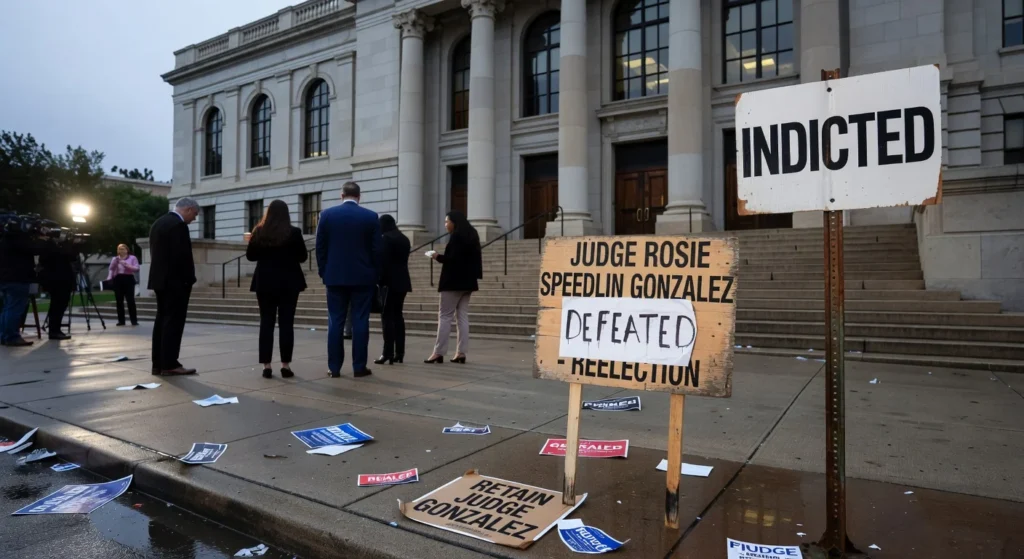
In the heart of Texas, a significant judicial upset unfolded as Democrat and LGBTQ+ advocate Judge Rosie Speedlin Gonzalez lost her reelection bid, overshadowed by an indictment for abusing her authority. This event has captivated public attention, highlighting tensions within the state’s legal system and raising questions about judicial conduct and accountability.
Gonzalez, who had served on the bench for several years, faced charges after an incident in which she ordered a defense attorney to be handcuffed during courtroom proceedings. This action was deemed excessive by critics, who argued it represented a misuse of judicial power and potentially violated the attorney’s rights. The event occurred in a high-profile case, drawing immediate scrutiny from legal observers and the media.
To understand the full context, it’s essential to delve into Gonzalez’s background. Elected in 2020, she was known for her progressive stances, particularly on issues related to LGBTQ+ rights and criminal justice reform. As one of the few openly LGBTQ+ judges in Texas, she championed causes that aimed to make the courts more inclusive and fair. However, her tenure was not without controversy, as some conservative groups accused her of bias in rulings, setting the stage for the events that led to her downfall.

The incident itself took place during a heated trial in early 2025, where Gonzalez was presiding over a case involving allegations of fraud. According to court records, the defense attorney repeatedly interrupted proceedings and challenged Gonzalez’s decisions, leading to a tense exchange. In response, Gonzalez called for security and ordered the attorney restrained, citing a need to maintain order. While some defended this as a necessary measure to uphold courtroom decorum, others viewed it as an overreach, sparking widespread debate about the boundaries of judicial authority.
Following the incident, Gonzalez was indicted by a grand jury on charges of official oppression and abuse of office. The indictment process involved a thorough investigation by the Texas Rangers and local prosecutors, who examined video footage, witness testimonies, and legal precedents. This legal scrutiny not only exposed potential flaws in Gonzalez’s judgment but also prompted a broader discussion about training and oversight for judges across the state.
Voters in Texas ultimately delivered a resounding verdict in the March 2026 election, ousting Gonzalez from her position. Her opponent, a more conservative candidate with a background in criminal law, capitalized on the scandal, running a campaign that emphasized ethics and impartiality in the judiciary. Turnout was notably high in the districts affected, with many voters expressing a desire for change and accountability, as polls indicated that the indictment played a pivotal role in their decisions.
Expert analysis from legal scholars has been plentiful in the wake of this event. Constitutional law experts, such as those from the University of Texas Law School, have pointed out that while judges have broad discretion to manage their courtrooms, actions like handcuffing an attorney could infringe on due process rights guaranteed by the U.S. Constitution. One professor noted, “This case underscores the delicate balance judges must maintain between authority and fairness, and it serves as a cautionary tale for others in similar positions.”
Political analysts have also weighed in, suggesting that Gonzalez’s loss reflects a growing trend in Texas politics where judicial races are becoming increasingly partisan. With the state’s Republican dominance, candidates perceived as liberal or progressive face heightened scrutiny, especially on issues like criminal justice. This incident may signal a shift, where ethical lapses are swiftly punished at the ballot box, potentially deterring future candidates from similar affiliations.
Public reaction to Gonzalez’s indictment and subsequent defeat has been mixed but vocal. On social media platforms, hashtags like #JudicialAccountability trended, with supporters of Gonzalez arguing that the response was disproportionate and possibly influenced by her identity as an LGBTQ+ advocate. Conversely, critics celebrated the outcome, viewing it as a victory for law and order. Protests outside the courthouse highlighted the divide, with some demonstrators calling for reforms to prevent such abuses, while others rallied in support of the attorney involved.
In the broader community, the event has sparked conversations about implicit biases in the judiciary. Advocacy groups for LGBTQ+ rights have expressed concern that Gonzalez’s ousting could discourage diversity on the bench, fearing that qualified candidates might hesitate to run due to fear of backlash. Meanwhile, organizations focused on legal ethics have used this as an opportunity to push for mandatory ethics training and clearer guidelines for judicial behavior.
The long-term implications of this case extend far beyond Gonzalez’s personal career. It could lead to legislative changes in Texas, such as enhanced oversight mechanisms for judges or revisions to courtroom conduct rules. For instance, state lawmakers might consider bills that require de-escalation training or independent reviews of judicial decisions in controversial cases, aiming to prevent future abuses of power.
Moreover, this incident highlights the intersection of politics and the judiciary, particularly in red states like Texas. As judicial elections often hinge on local issues, Gonzalez’s defeat might influence how candidates position themselves in future races, emphasizing neutrality and caution over progressive agendas. This could result in a more conservative bench, potentially affecting outcomes in cases related to civil rights, criminal justice, and beyond.
From a national perspective, the case serves as a reminder of the vulnerabilities in America’s judicial system. With increasing polarization, similar controversies could arise elsewhere, prompting a reevaluation of how judges are selected, trained, and held accountable. Experts warn that without proactive measures, such events might erode public trust in the courts, which is essential for the rule of law.
In reflecting on Gonzalez’s legacy, it’s clear that her contributions to LGBTQ+ advocacy were significant, yet overshadowed by this single misstep. Her story illustrates the high stakes of public office, where one decision can alter a career and spark widespread debate. As Texas moves forward, the lessons from this episode may foster a more robust and equitable judicial system, ensuring that authority is wielded responsibly for the benefit of all citizens.
Ultimately, the saga of Judge Rosie Speedlin Gonzalez underscores the importance of ethical conduct in the judiciary and the power of voters to enforce standards. While her loss marks the end of an era for progressive representation in Texas courts, it opens the door for reforms that could strengthen the system as a whole, promoting fairness and accountability in the years to come.