Trump and Netanyahu Diverge on Middle East Strategies
AI-generated context summary requested by a Free News Reader user. Sourced via Gemini from publicly available information — no paywalled content was accessed.
You hit a paywall. Here’s the context on this topic based on publicly available information. We did not access any paywalled content. View original article.
Trump and Netanyahu Diverge on Middle East Strategies
- The alliance between former US President Donald Trump and Israeli Prime Minister Benjamin Netanyahu, built during Trump's 2017-2021 term, included key moves like the 2018 US embassy relocation to Jerusalem.
- Ongoing Middle East tensions, such as the Israel-Hamas conflict that began in October 2023, have exposed differences in US and Israeli approaches to regional security and diplomacy.
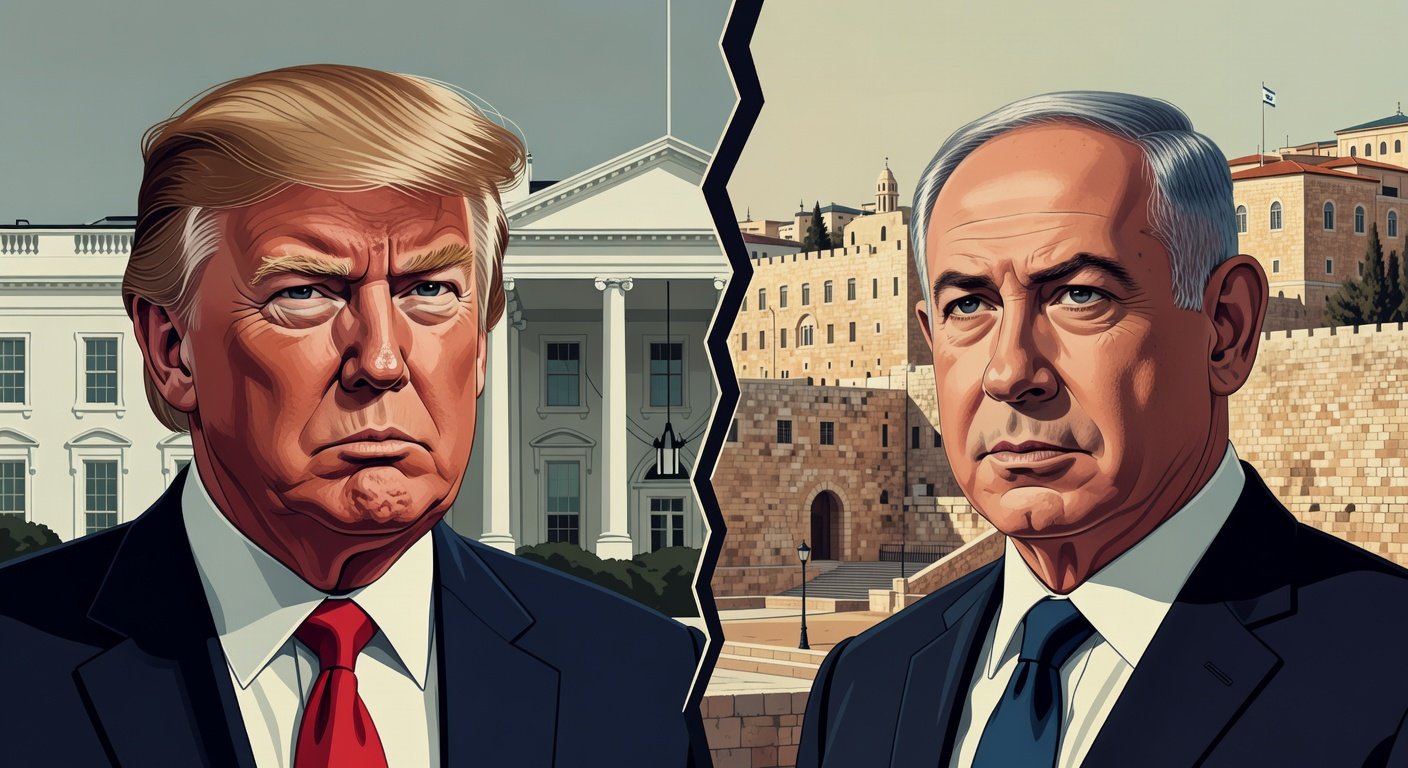
Opinion | Trump and Netanyahu Are No Longer on the Same Page · Image: Grok AI
Full Summary — powered by AI
In recent years, the once-strong partnership between former US President Donald Trump and Israeli Prime Minister Benjamin Netanyahu has shown signs of fracturing amid evolving geopolitical dynamics in the Middle East. Trump, during his presidency from 2017 to 2021, pursued policies that aligned closely with Netanyahu’s government, such as recognizing Jerusalem as Israel’s capital and brokering the Abraham Accords in 2020 to normalize relations between Israel and several Arab nations. This era marked a high point in US-Israel relations, emphasizing mutual interests in countering Iranian influence and promoting regional stability.
However, as global priorities shift, American objectives have increasingly clashed with Israel’s strategies, particularly regarding responses to conflicts involving Iran and Palestinian territories. For instance, the Israel-Hamas war that erupted in October 2023 has highlighted these divergences, with the US pushing for diplomatic efforts to minimize civilian casualties and foster cease-fires, while Israel maintains a more hardline stance on security. This evolving discord raises questions about the future of US-Israel ties, potentially affecting broader alliances in the region and influencing international efforts toward peace. As leaders navigate these challenges, the implications could reshape Middle East policies for years to come, impacting global security and economic interests.
Read More (Free Sources)
- Israel Face Growing Tensions — BBC News — BBC News
- Analysis Netanyahu039s Approach Clashes — AP News — Reuters
- TrumpEra Ties Israel Changing — NPR — NPR