Man Shocked By What Happens After Unchaining Dog (Video)
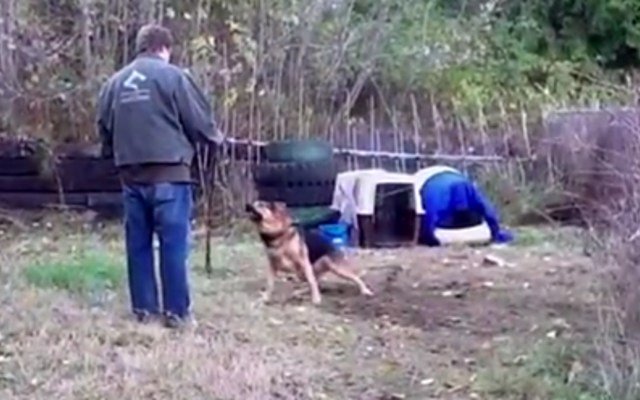
When a man took an aggressive dog off of his chain, he was shocked by what happened (video below).
In a video posted to YouTube, a man approaches a dog that has been chained up outside and tries to rescue him. The dog, Alex, is extremely aggressive and can be seen lunging at the man and loudly barking.
Eventually, the man was able to get Alex into a cage and into the humane society’s van. While transferring the dog from the van into his truck, he noticed that Alex was staying calm and was seeking attention, so he decided to carefully let him out to pet him.
“Instead of doing the hands-off transfer that I had planned, I took him out for a few minutes just to get to know him a little bit better,” the rescuer said in the YouTube video.
Just 24 hours later, the rescuer recorded himself with Alex, who is looking noticeably happier, while the rescuer pets him. He says that the only thing that changed from the day before was that Alex was taken off the chain.
“As you can see, the dog that was snarling and lunging and trying to get me yesterday doesn’t want anything now but to sit on my lap, so he’ll be going up for adoption soon and off to a new life,” he said.
According to The Humane Society of the United States, chained dogs often come off as more aggressive because being chained causes anxiety and agitation. When confined to a small space with little to no socialization, dogs tend to become more territorial.
The Humane Society explains:
Dogs are naturally social beings who need interaction with humans and/or other animals. Intensive confinement or long-term restraint can severely damage their physical and psychological well-being. An otherwise friendly and docile dog, when kept continuously chained or intensively confined in any way, becomes neurotic, unhappy, anxious and often aggressive.
It is common for continuously tethered dogs to endure physical ailments as a result of being continuously tethered. Their necks can become raw and sore, and their collars can painfully grow into their skin. They are vulnerable to insect bites and parasites, and are at high risk of entanglement, strangulation, and harassment or attacks by other dogs or people.
Tethered dogs may also suffer from irregular feedings, overturned water bowls, inadequate veterinary care and extreme temperatures. During snow storms, these dogs often have no access to shelter. During periods of extreme heat, they may not receive adequate water or protection from the sun. Owners who chain their dogs are less likely to clean the area of confinement, causing the dogs to eat and sleep in an area contaminated with urine and feces. What’s more, because their often neurotic behavior makes them difficult to approach, chained dogs are rarely given even minimal affection. Tethered dogs may become “part of the scenery” and can be easily ignored by their owners.
See footage of Alex before and after being chained in the video below: