Columbia Man Accused in Unprovoked Stabbing Released on $10,000 Bond
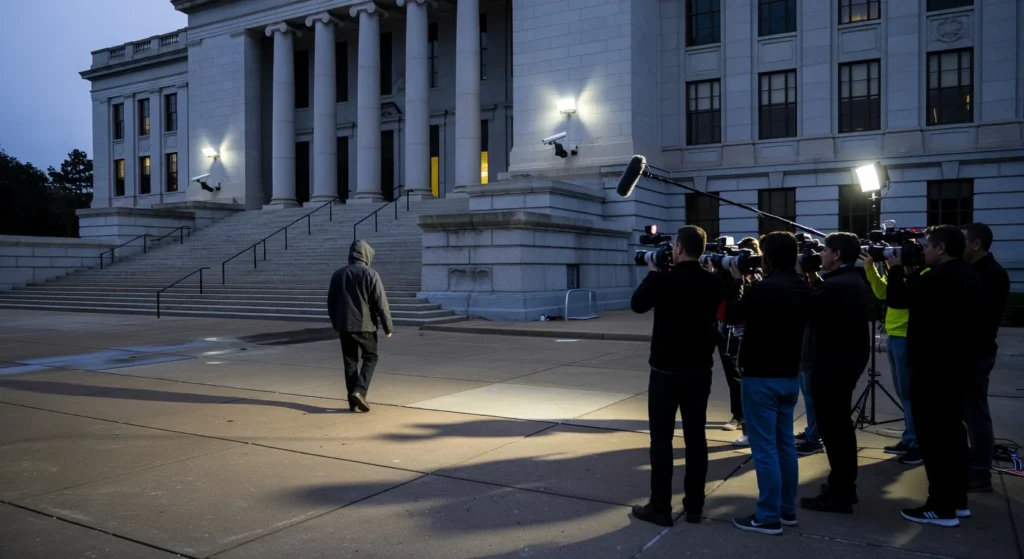
COLUMBIA, S.C.—An 18-year-old University of South Carolina student accused of stabbing a 58-year-old man in an unprovoked attack in the Shandon neighborhood has been released from custody on a $10,000 personal recognizance bond, according to court records and police statements. The incident, which occurred on the evening of March 2, 2026, has drawn attention to questions of pretrial release practices in violent felony cases amid broader national debates over bail reform and public safety.
Justin Alexander Emmanuel Reyes faces charges of assault and battery of a high and aggravated nature—a felony in South Carolina—and possession of a weapon during a violent crime. Columbia Police Department investigators arrested Reyes shortly after the attack, recovering a weapon at the scene. The victim, who was walking his dog in the 2700 block of Wheat Street around 6:30 p.m., suffered multiple stab wounds—approximately six, according to the victim’s wife—and was hospitalized in stable condition following the assault. Police described the stabbing as unprovoked, with no apparent prior connection between the suspect and victim.

A judge set the bond during a hearing on March 3, 2026, with conditions prohibiting Reyes from any direct or indirect contact with the victim, as well as restrictions barring him from the victim’s home, place of worship, or the incident location. Personal recognizance (PR) bonds allow defendants to be released without posting cash or collateral, relying instead on their promise to appear in court. Reyes was no longer listed in the Alvin S. Glenn Detention Center roster as of early March 5, and his attorney has stated that he is receiving mental health care at a facility. Reyes has no prior criminal record, according to available reports.
The case highlights ongoing tensions in South Carolina’s criminal justice system regarding bond decisions for serious offenses. While South Carolina law permits judges discretion in setting bonds for non-capital felonies, critics often argue that low or unsecured bonds in cases involving alleged violence can undermine community safety. Supporters of such releases point to constitutional protections against excessive bail and the presumption of innocence, noting that pretrial detention should not serve as punishment.
This incident occurs against a backdrop of fluctuating violent crime trends in Columbia and across the United States. In Richland County, which includes Columbia, aggravated assaults have remained a persistent concern, though overall violent crime rates in many South Carolina urban areas have shown declines in recent years following national patterns. Nationally, the FBI’s preliminary 2025 data indicated a continued drop in violent crime from pandemic-era peaks, with aggravated assaults down approximately 3-5% in many large cities compared to 2023-2024 figures. However, public perception often diverges from statistics, particularly when high-profile incidents involve apparent random violence or vulnerable victims.
The release of suspects on PR bonds in felony assault cases has fueled debates about bail reform nationwide. In jurisdictions that have implemented changes—such as limiting cash bail for certain offenses—studies show mixed results. A 2024 analysis by the Council on Criminal Justice found that pretrial release without monetary conditions did not significantly increase failure-to-appear rates or new criminal activity in many pilot programs, though outcomes varied by jurisdiction and offense type. Critics, including some law enforcement officials, contend that unsecured bonds can fail to deter reoffending in cases involving alleged serious violence, potentially eroding trust in the system.

South Carolina has not adopted sweeping bail reform like some states, but judges retain wide latitude. In Reyes’ case, the $10,000 PR bond—effectively no cash required—has prompted online discussion and criticism, with some residents expressing concern over the perceived leniency given the nature of the charges. No public statements from the judge were immediately available, and details on the bond hearing remain limited.
Broader U.S. crime trends provide additional context. While violent crime has declined substantially since the early 1990s—down roughly 50% nationally according to long-term Bureau of Justice Statistics data—specific categories like aggravated assault have seen uneven progress. Homelessness and mental health issues intersect with crime in many urban areas, though this case involves a young student with no reported prior record. Experts note that untreated mental health conditions can contribute to isolated violent acts, and pretrial diversion into treatment—rather than prolonged detention—may align with evidence-based approaches that reduce recidivism.
A 2025 report from the Vera Institute of Justice highlighted that pretrial detention often exacerbates underlying issues like mental illness or substance use, increasing the likelihood of future involvement with the justice system. In contrast, supervised release with conditions, including mandatory treatment, has shown promise in some studies for low-risk defendants. Reyes’ attorney has indicated that mental health care is underway, which could factor into future proceedings.
As the case progresses through Richland County’s Fifth Judicial Circuit, it underscores the challenges courts face in balancing individual rights with community protection. Prosecutors may seek to revoke or modify the bond if new evidence emerges, while defense advocates emphasize due process. The victim’s recovery and the outcome of the investigation will likely influence public discourse on these issues in South Carolina’s capital city.
Columbia Police continue to investigate, and no trial date has been set. The incident serves as a reminder that while aggregate crime statistics trend downward in many areas, individual acts of violence—particularly those appearing random—can heighten concerns about safety in residential neighborhoods.