Outrage Builds Over Violent Subway Assault by Career Criminal
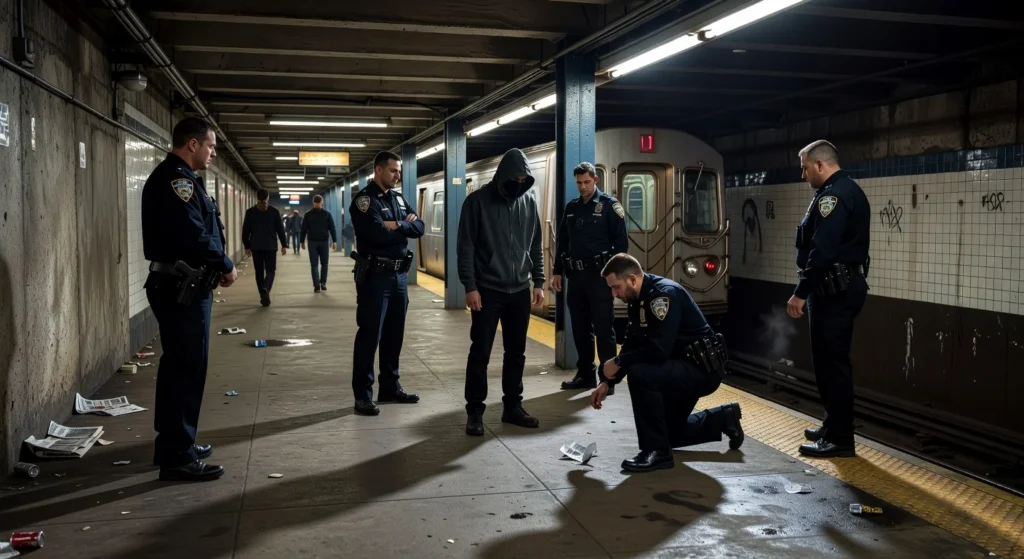
NEW YORK—Authorities have arrested two individuals in connection with a harrowing incident at Penn Station where a homeless man was allegedly set on fire while sleeping, underscoring ongoing concerns about violence in one of the nation’s busiest transit hubs. The attack, which occurred on Monday night in the Amtrak rotunda beneath Madison Square Garden, left the 37-year-old victim with second-degree burns. He remains in stable condition at a local hospital.
According to police reports, Damon Johnson, 47, was apprehended by Amtrak police on Tuesday evening near West 31st Street and Eighth Avenue. He faces charges of attempted murder, assault, and reckless endangerment. Johnson has a lengthy criminal history, with 88 prior arrests, predominantly related to drug offenses and fare evasion. His co-accused, Lyla Najjar, 33, was arrested the following morning near West 37th Street and Seventh Avenue and charged with assault. Initial investigations suggested three people may have been involved, but officials have not confirmed whether a third suspect is still being sought. No information on legal representation for either Johnson or Najjar was immediately available.

The incident unfolded in a high-traffic area of Penn Station, a sprawling complex that serves as a gateway for commuters, travelers, and residents alike. Witnesses described the victim as asleep when the assailants approached, doused him with a flammable liquid, and ignited it before fleeing. Emergency responders arrived promptly, but the attack has reignited debates about security in public spaces, particularly those frequented by vulnerable populations such as the homeless.
This event comes at a time when New York City has seen notable improvements in overall crime statistics, yet certain categories of violence persist or even rise. In 2025, the city recorded a 3% decline in major crimes compared to the previous year, with murders dropping by more than 20% to 305 incidents—the lowest in decades, excluding a few outlier years in the late 2010s. Shootings reached historic lows, with 856 victims reported, down from 1,103 in 2024. These reductions have been attributed to data-driven policing strategies, including increased patrols and targeted interventions against gun violence, as announced by city officials including Mayor Zohran Mamdani and Police Commissioner Jessica Tisch.
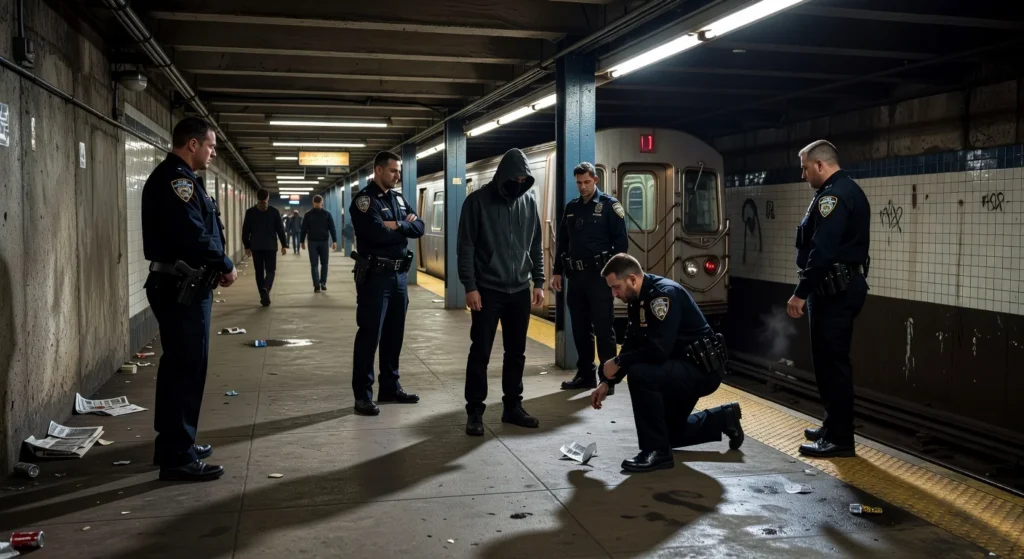
However, felony assaults have bucked the trend, increasing for the sixth consecutive year to levels not seen since 1997. Reported rapes also rose by 16%, partly due to expanded legal definitions of sexual assault under state law. In the subway system, which includes hubs like Penn Station, crime decreased overall, with a focus on reducing robberies and retail theft contributing to a safer environment above and below ground. Despite these gains, high-profile incidents like this arson attack fuel public perceptions of disorder, even as data suggests broader progress.
Zooming out to the national landscape, this case reflects deeper systemic issues in America’s approach to crime, homelessness, and public safety. Homeless individuals are disproportionately victimized, with data showing they are far more likely to suffer violent crimes than to commit them. A 2025 analysis from the U.S. Interagency Council on Homelessness emphasizes that people experiencing homelessness face constant threats of violence, often amplified by their visibility in public spaces like transit stations. Nationally, homelessness surged 12% between 2022 and 2023, affecting over 650,000 people on any given night, with a quarter unsheltered. In urban centers, this has intersected with crime trends, where survival-related offenses—such as trespassing or loitering—lead to disproportionate arrests.
Johnson’s 88 prior arrests highlight another facet: recidivism. While U.S. recidivism rates have improved, challenges remain. The three-year return-to-prison rate has dropped 23% nationally since 2008, from 50% to about 39% for those released in recent years. However, rearrest rates over five years hover around 71%, often involving non-violent offenses like drug possession or property crimes. Experts note that repeat offenders frequently cycle through the system due to underlying issues like poverty, mental illness, and substance abuse, which incarceration exacerbates rather than resolves. In Johnson’s case, his history of drug-related charges aligns with patterns where unhoused individuals are booked for low-level crimes, comprising 4.5% of jail bookings but 8% of rebookings.
Criminalizing homelessness, through ordinances against sleeping in public or panhandling, has drawn criticism for perpetuating a costly cycle. A 2025 Prison Policy Initiative report estimates that 205,000 unhoused people are jailed annually nationwide, often for “survival crimes,” at a taxpayer cost of up to $83,000 per individual per year—far exceeding the expense of supportive housing. Such policies, critics argue, fail to enhance public safety and instead deepen entrenchment in the criminal justice system. In New York, daily costs for supportive housing stand at $48 per person, versus $1,414 for incarceration.
Transit systems, as microcosms of urban life, amplify these dynamics. In 2025, U.S. transit agencies reported mixed but improving safety metrics. Los Angeles Metro saw violent crimes drop 6.7%, attributing gains to visible patrols, access controls, and partnerships addressing homelessness and mental health. Philadelphia’s SEPTA achieved a 33% reduction in serious crimes through enhanced recruitment and surveillance. Federally, the U.S. Department of Transportation has scrutinized agencies in cities like New York, Chicago, and Boston, urging reports on fare evasion and crime reduction, with potential funding redirects for non-compliance. Legislation like the Safe and Affordable Transit Act of 2025 proposes grants for officer hires and infrastructure upgrades, aiming to bolster security without punitive overreach.
Yet, national crime trends offer a nuanced picture. A 2025 Council on Criminal Justice report on 40 large cities shows homicides and aggravated assaults declining from 2018 peaks, though motor vehicle thefts remain elevated in some areas. Violent crime rates nationwide are 53% below 1991 levels, with property crimes down 66%. This suggests that while incidents like the Penn Station attack are alarming, they occur against a backdrop of long-term declines, potentially driven by economic recovery, community programs, and policing reforms.
The interplay of homelessness and crime demands multifaceted solutions. Evidence indicates that punitive measures, such as jailing for minor offenses, increase future arrests and hinder housing access. Instead, investments in affordable housing, mental health services, and substance abuse treatment could break the cycle. A 2025 National Alliance to End Homelessness report warns that cuts to social safety nets exacerbate the issue, harming public health and safety. In cities like New York, where chronic homelessness persists amid a housing shortage, integrating transit security with social services might yield sustainable improvements.
As the investigation into the Penn Station attack continues, it serves as a stark reminder of vulnerabilities in America’s urban fabric. While crime data points to progress, addressing root causes—poverty, addiction, and inadequate support systems—remains essential to preventing such tragedies and fostering safer communities for all.