The IEA’s Historic Oil Release: A Band-Aid on a Geopolitical Wound in Global Energy Markets
In an extraordinary display of coordinated action, the International Energy Agency announced on March 11 that its 32 member countries—primarily advanced economies in North America, Europe, and Northeast Asia—had unanimously agreed to release 400 million barrels of emergency oil stocks. This marks the largest such drawdown in the agency’s 52-year history, dwarfing the previous record of roughly 180 million barrels coordinated in 2022 amid Russia’s invasion of Ukraine.
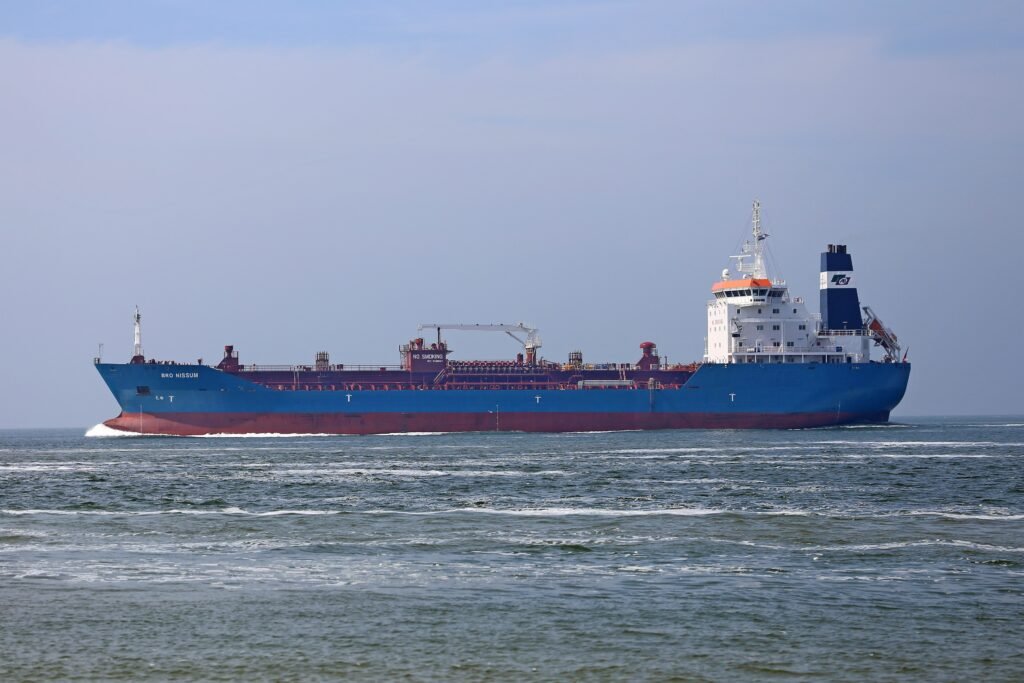
The trigger? A rapidly escalating conflict involving the United States, Israel, and Iran that erupted on February 28, 2026, and has since inflicted the most severe disruption to global oil and gas flows in modern times. Tanker traffic through the Strait of Hormuz—a chokepoint carrying about 20% of the world’s seaborne crude and a significant share of liquefied natural gas (LNG)—has virtually halted amid fears of Iranian attacks, including reports of mines deployed in the waterway. Gulf producers have slashed output by at least 10 million barrels per day due to storage constraints and shipping paralysis, while refinery disruptions threaten diesel and jet fuel supplies. Global LNG availability has dropped by around 20%, pitting Asian buyers against Europe in a scramble for scarce cargoes.
IEA Executive Director Fatih Birol, speaking after consultations with G7 energy ministers at the agency’s Paris headquarters, framed the decision starkly: the Middle East conflict poses “significant and growing risks” to energy security, affordability, and the broader global economy. The release, he emphasized, aims to bridge immediate shortfalls, but ultimate stability hinges on resuming tanker flows through the Strait. No fixed timeline was set; each member will determine its drawdown pace based on domestic circumstances. The U.S. is expected to shoulder the largest share, with reports indicating a contribution of around 172 million barrels, while Japan—highly dependent on Middle East supplies—vowed to begin releases as early as the following week.
Oil markets reacted with volatility. Brent crude futures, the global benchmark, surged toward $120 per barrel in the conflict’s early days before retreating. Following the IEA announcement, prices steadied but remained elevated, trading around $97 to $101 per barrel as of March 13, reflecting persistent uncertainty over the conflict’s duration and the effectiveness of the intervention.
This unprecedented step underscores both the strengths and limitations of the IEA’s emergency framework, established in 1974 after the Arab oil embargo. Members maintain more than 1.2 billion barrels in public emergency stocks, supplemented by roughly 600 million barrels of obligated industry holdings—providing a collective buffer equivalent to several months of net imports for many nations. The 400 million-barrel release taps roughly a third of those government-controlled reserves, a bold move designed to signal resolve and deter panic buying.
Yet the scale of the disruption tests the system’s boundaries. Analysts from firms like Rapidian Energy Group and Wood Mackenzie have described the current shortfall as the largest in history, far exceeding disruptions from past crises. Even at maximum capacity, the IEA’s drawdown cannot fully offset the roughly 20 million barrels per day that normally transit the Strait. Iranian threats, including statements suggesting oil could reach $200 per barrel if the blockade persists, add to the risk premium. Meanwhile, ongoing attacks on infrastructure continue to erode production and export capabilities across the region.
From a policy standpoint, the IEA’s action highlights the enduring fragility of global energy markets in an era of geopolitical volatility. The conflict has exposed vulnerabilities that decades of diversification efforts—shale booms in the U.S., renewable buildouts in Europe, and new LNG routes—have only partially mitigated. Advanced economies, while holding substantial reserves, remain tethered to Middle East flows for a meaningful portion of supply. The LNG squeeze, in particular, illustrates how interconnected oil and gas markets have become: reduced Gulf exports force wealthier Asian importers to bid aggressively against Europe, driving up spot prices and straining households and industries already grappling with inflation.
Critics may question whether the release is premature or insufficient. G7 ministers, in prior discussions, stopped short of mandating action, instead tasking the IEA with scenario assessments before committing. The decision to proceed reflects mounting pressure as prices threatened to rekindle inflationary pressures and economic slowdown fears. But reserves are finite; prolonged conflict could deplete buffers faster than anticipated, leaving markets exposed if tensions escalate further.
In my assessment, this episode serves as a stark reminder that energy security cannot be decoupled from broader foreign policy realities. The U.S.-led coalition’s involvement in the conflict has directly contributed to the very supply shock now requiring emergency countermeasures. While the IEA mechanism provides a vital short-term stabilizer—preventing a full-blown 1970s-style crisis—the real resolution lies in diplomacy capable of reopening the Strait and de-escalating hostilities. Absent that, the release risks becoming a temporary palliative rather than a cure.
Looking ahead, the intervention buys time but does not alter fundamentals. Global inventories remain relatively healthy at over 8.2 billion barrels, the highest since early 2021, offering some cushion. Yet sustained production cuts in the Gulf, combined with potential refinery bottlenecks, could push refined product prices higher, hitting consumers at the pump and in heating bills. For policymakers, the episode reinforces the urgency of accelerating transitions to renewables and electrification—not merely for climate goals, but as a hedge against geopolitical blackmail.
Japan’s swift commitment exemplifies the asymmetric vulnerabilities: nations with limited domestic resources face acute risks when chokepoints close. In contrast, the U.S., now the world’s top oil producer, can lead releases without immediate existential threat to supply. This disparity may shape future IEA dynamics, as members weigh burden-sharing in an increasingly multipolar energy landscape.
Ultimately, the 400 million-barrel release is a pragmatic response to an acute crisis, demonstrating the value of collective action among allies. But it also exposes the limits of stockpiles when geography and geopolitics conspire against flows. As the conflict enters its third week, markets will watch not just reserve drawdowns but diplomatic breakthroughs—or escalations—that determine whether this historic intervention proves sufficient or merely the opening act in a deeper energy reckoning.