Surge in Bright Fireballs Prompts Astronomers to Call for Deeper Scrutiny of Near-Earth Space Debris
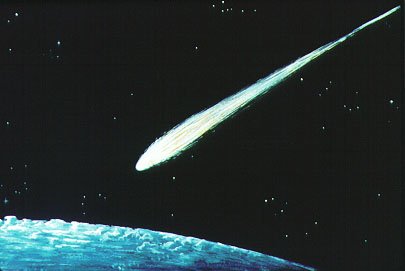
A noticeable uptick in dramatic meteor events this year has astronomers urging a closer look at the streams of rocky debris intersecting Earth’s orbit. In the first three months of 2026, the American Meteor Society documented a striking increase in large, bright fireballs—many producing sonic booms audible over wide areas and drawing hundreds or even thousands of eyewitness reports. While individual meteors are routine, the combination of elevated frequency, intensity, and public visibility has raised questions about whether something subtle has shifted in the near-Earth meteoroid environment.
Data released this week by the AMS paints a clear statistical picture. In the first quarter alone, the society logged more than 2,000 fireball reports. Of particular note were 38 events that generated 50 or more witness submissions—more than double the recent historical average of about 18. At the higher threshold of 100 or more reports, 2026 produced 14 such cases, again roughly twice the norm. Excluding one exceptionally bright daytime event over Western Europe that drew more than 3,200 reports, the average number of witnesses per qualifying March fireball reached 67, about double typical levels. Roughly 79% of these high-visibility events produced sonic booms, a hallmark of larger, more energetic objects penetrating deep into the atmosphere before breaking apart.
Mike Hankey, a researcher with the AMS, described the pattern as consistent across multiple metrics. “After years of stable baseline activity, something appears to have shifted,” he noted in comments accompanying the analysis. He pointed out that prior years with elevated percentages of loud fireballs—such as 2021 and 2023—tended to feature moderate overall counts. In 2026, both the rate and the absolute numbers stand out. Events that historically might attract 25 to 49 reports are instead drawing 50, 100, or even 200-plus witnesses, suggesting not merely better reporting but a genuine change in the incoming material.
Notable incidents illustrate the trend. On March 17, a roughly six-foot-wide, seven-ton meteor streaked over the Cleveland, Ohio, region at high speed, visible across multiple states and generating widespread sonic effects. Fragments from that event, suspected to be achondritic HED meteorites possibly linked to the asteroid Vesta, have been recovered. Just days later, on March 21, a daytime fireball over the Houston, Texas, area produced loud booms, shook homes, and scattered debris—including at least one fragment that crashed through a residential roof. Similar bright events lit up skies over the U.S. eastern seaboard on March 9, parts of France on March 10-11, and multiple locations in Europe earlier in the month. In total, major fireballs have appeared roughly once every three days since the start of the year.
Trajectory data compiled from witness reports point toward the Anthelion sporadic source—a broad region of the sky where meteors appear to originate from the direction opposite the Sun. Activity from this source appears roughly doubled compared with recent norms, with a notable concentration of paths traced to a relatively compact patch of sky. This clustering argues against the emergence of a new annual meteor shower, which would typically show more predictable radiant behavior. It also effectively rules out exotic explanations such as artificial objects or spacecraft; there is no evidence of anomalous trajectories, controlled deceleration, or non-natural compositions in the recovered fragments.
From a scientific standpoint, the surge is intriguing precisely because it defies easy categorization. Larger fireballs—those capable of producing sonic booms and occasionally dropping meteorites—are rare enough that a sustained increase merits attention. The near-Earth environment is not static; gravitational perturbations from planets, cometary activity, and collisions in the asteroid belt can occasionally alter the flux of small bodies crossing our path. A temporary enhancement in debris from an undetected parent body or a resonant dynamical effect could produce exactly this kind of clustered activity without heralding catastrophe.
Yet the practical implications are not negligible. Sonic booms rattle windows and unsettle communities. On at least two occasions this month, meteorite fragments have struck residential structures, fortunately causing no injuries but highlighting the low-probability, high-consequence nature of these events. As urban populations grow and more people carry cameras and smartphones, public awareness and reporting have improved, which may amplify the perception of a “rash” of sightings. Even so, the AMS data suggest the upward shift in witness counts is more pronounced at higher thresholds, a signature less easily explained by social media or AI-assisted reporting alone.
In my assessment, this episode underscores both the value and the limitations of citizen-science networks like the AMS. Witness reports provide rapid, geographically broad coverage that professional camera networks cannot yet match on a global scale. However, they lack the precision of radar, infrasound, or dedicated all-sky observatories for determining exact orbits, masses, and compositions. A serious investigation would benefit from cross-referencing these reports with data from systems operated by NASA, the European Space Agency, and academic consortia. Expanded funding for meteoroid monitoring—perhaps tied to broader planetary-defense initiatives—could yield dividends not only for understanding this surge but for cataloging the overall population of potentially hazardous objects.
Skeptics rightly caution against overinterpretation. Random statistical clustering happens, and Earth has endured far more intense meteoroid bombardments in its geological past without existential threat. Some experts, including meteorite researchers, have described the recent high-profile falls in populated areas as coincidental rather than indicative of a systemic change. Still, when multiple independent metrics—event count, witness density, sonic-boom frequency, and radiant clustering—all point in the same direction, dismissing the pattern outright would be premature.
The broader context is worth considering. Humanity’s growing reliance on satellite constellations for communication, navigation, and Earth observation makes any fluctuation in the small-body environment relevant to operational risk. While the objects responsible for these fireballs are far too small to pose existential dangers, understanding their provenance could refine models of how material migrates through the inner solar system. In an era when private space companies and national agencies are accelerating lunar and Martian ambitions, baseline knowledge of the interplanetary debris field becomes increasingly strategic.
For now, the call from astronomers is measured: continued monitoring and rigorous analysis are warranted to distinguish normal variance from an uncharacterized population of debris. Skywatchers should continue reporting sightings through established channels, as each data point helps refine the picture. The heavens have always delivered occasional spectacles, but when those spectacles arrive with greater frequency and drama, science has an obligation to investigate.
Whether 2026 ultimately proves an outlier year or the start of a longer-term shift remains to be seen. What is clear is that the solar system is dynamic, and our ability to observe and interpret its subtle signals has never been more important—for scientific curiosity, public safety, and the long-term stewardship of Earth’s cosmic neighborhood.