Failed U.S.-Iran Talks in Pakistan Expose Limits of Ceasefire and the Enduring Power of the Strait of Hormuz
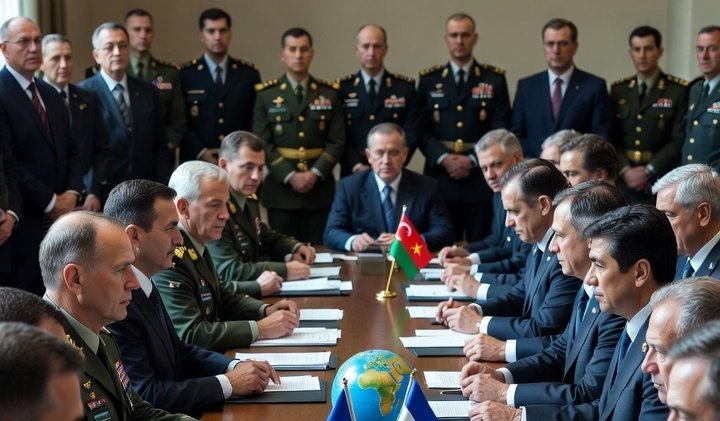
Vice President JD Vance departed Islamabad on Sunday after more than 21 hours of direct negotiations with Iranian officials failed to produce an agreement to end the U.S.-Israeli military campaign against Iran. The impasse, mediated by Pakistan, centered on Tehran’s refusal to formally renounce nuclear weapons development—the core American demand—leaving a fragile two-week ceasefire that began earlier this month in jeopardy and global energy markets on edge.
The talks, the first face-to-face U.S.-Iranian discussions since the 1979 hostage crisis, had been billed as a potential breakthrough following the Feb. 28 outbreak of hostilities. Iran had agreed in principle to a ceasefire that included reopening the Strait of Hormuz, the narrow chokepoint through which roughly one-fifth of global seaborne oil flows. Yet deep disagreements persisted over nuclear safeguards, sanctions relief, and control of the strategic waterway. Iranian negotiators reportedly treated certain positions as non-negotiable red lines, while the U.S. delegation insisted on verifiable commitments to forgo nuclear arms.
President Donald Trump, speaking to reporters outside the White House on Saturday, projected confidence bordering on indifference. “Regardless what happens we win,” he said, downplaying the need for a formal deal and claiming outright military victory. His administration has framed the conflict as a decisive blow to Iranian capabilities, even as Tehran continues to exert leverage through its grip on Hormuz. Pakistani Foreign Minister Ishaq Dar urged both sides to uphold the ceasefire, calling it “imperative” for regional stability and pledging continued mediation.


In a notable military development coinciding with the talks’ collapse, two U.S. Navy destroyers transited the Strait of Hormuz—the first such passage since fighting began. U.S. Central Command described the movement as preparation for mine-clearing operations, a routine assertion that Iranian state media swiftly denied, insisting the joint military command had blocked any unauthorized transit. The episode underscores the waterway’s status as the conflict’s central prize and flashpoint. Iran has selectively permitted some of its own oil exports, primarily to China, while throttling others, driving up global crude prices and gasoline costs for American drivers.
The broader war, launched jointly by the United States and Israel, has already exacted a heavy toll. Earlier reporting placed Iranian deaths above 1,900, with additional casualties in Lebanon from related Israeli operations against Hezbollah. Environmental damage is visible in Tehran, where pollution from strikes has left measurable black soot on everyday surfaces. Pope Leo XIV used his Palm Sunday address to denounce what he called the “delusion of omnipotence” driving the conflict, rejecting any religious justification for the violence.
For the global economy, the stakes remain enormous. Elevated fuel prices have rippled through supply chains, contributing to inflationary pressures at a time when many households are still recovering from prior shocks. Tribal gas stations on Native American reservations have emerged as rare pockets of relative relief for U.S. consumers. Meanwhile, the diversion of American attention toward the Middle East has raised quiet concerns in Asia about reduced deterrence against other adversaries.
From a strategic standpoint, the failed Islamabad talks illustrate the inherent difficulties of negotiating with a regime that views nuclear ambiguity as an existential insurance policy. The Trump administration’s maximalist demands—verifiable denuclearization coupled with military pressure—clash with Iran’s insistence on retaining leverage through the strait and proxy forces. Trump’s public bravado, including past threats to target civilian infrastructure, may have hardened Iranian resolve even as it rallied domestic support at home.
In my view, this episode reveals both the strengths and pitfalls of the current U.S. approach. Assertive military action, including the recent destroyer transit and earlier strikes, has clearly disrupted Iranian operations and reopened limited shipping lanes. Yet sustainable victory requires more than tactical gains; it demands a diplomatic off-ramp that addresses core security concerns without rewarding bad behavior. A short-term ceasefire that merely pauses hostilities risks becoming a recurring cycle of escalation and fragile truces, exacting cumulative costs in blood, treasure, and economic stability.
The coming days will test whether the two-week ceasefire can hold. Upcoming direct talks between Israel and Lebanon, scheduled to begin Tuesday in Washington with approval from Prime Minister Benjamin Netanyahu and Lebanese President Joseph Aoun, add another layer of complexity. Any progress there could ease pressure on the broader conflict, but failure risks spillover that further complicates U.S.-Iran dynamics.
Longer term, the crisis should prompt a reassessment of energy security policy. Decades of dependence on the Strait of Hormuz have left the world vulnerable to disruption by a single actor. Accelerating diversification—through expanded domestic production, allied energy partnerships, and faster adoption of non-fossil alternatives—would reduce the leverage available to hostile regimes. At the same time, countering Iran’s nuclear ambitions requires credible multilateral pressure rather than episodic bilateral talks that collapse under mutual distrust.
Trump’s claim of victory may resonate politically, but markets and allies will judge success by whether shipping lanes remain reliably open, nuclear breakout timelines are extended, and regional proxies are contained. For now, the Hormuz standoff continues to dictate the pace: Iran retains the ability to inflict economic pain, while the United States holds superior conventional power but faces the classic dilemma of turning battlefield advantages into enduring political outcomes.
As Vance returns home empty-handed and Pakistani mediators vow to persist, the conflict enters a new phase of uncertainty. The world will watch whether the fragile ceasefire erodes into renewed fighting or provides breathing room for more realistic negotiations. Either path carries risks, but prolonged ambiguity serves no one’s interests—least of all the American consumers already paying higher prices at the pump and the Iranian civilians bearing the human cost of confrontation.
The coming weeks may clarify whether this round of diplomacy was a necessary reset or merely another chapter in a grinding standoff. What is already evident is that control of the world’s most critical 21 miles of waterway continues to shape great-power calculations in ways that no single negotiation in Islamabad can easily resolve.