Sperm Whales’ Click-Based “Vowels”: New Study Reveals Striking Parallels to Human Speech, Deepening Mystery of Cetacean Intelligence
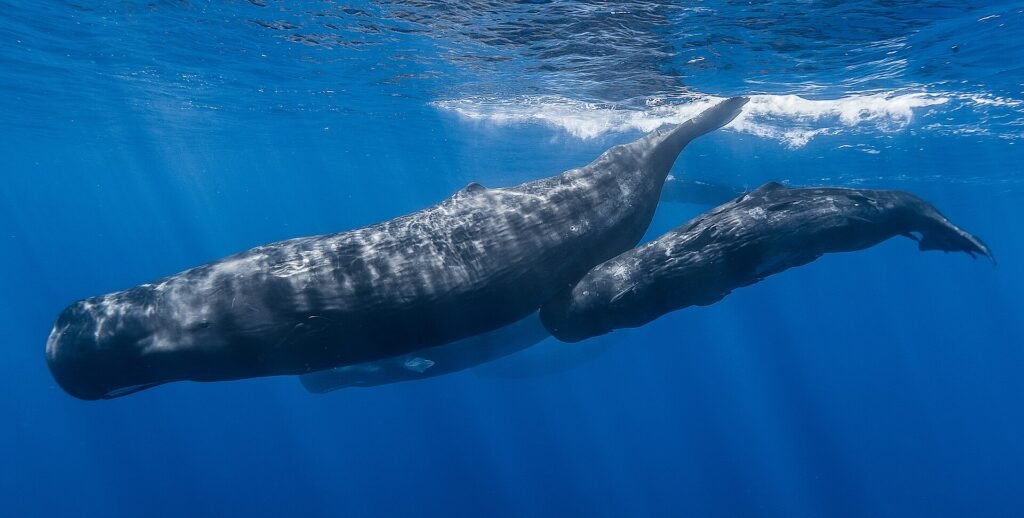
Sperm whales, the ocean’s largest toothed predators, may communicate using acoustic features strikingly similar to the vowel sounds that form the backbone of human language, according to a study published this week in the Proceedings of the Royal Society B. Researchers analyzing the animals’ rhythmic series of clicks—known as codas—identified distinct spectral patterns analogous to the formants that define vowels such as “a” and “i” in spoken English and other tongues. The discovery adds a new layer of complexity to one of the most sophisticated nonhuman communication systems known to science and raises intriguing questions about the evolutionary pressures that shape advanced vocal signaling across vastly different species.
Led by linguist Gašper Beguš of the University of California, Berkeley, and affiliated with the nonprofit Project CETI (Cetacean Translation Initiative), the research examined high-quality underwater recordings of sperm whale codas. These vocalizations are produced not through vocal cords but by specialized structures in the whales’ nasal passages, where phonic lips generate powerful clicks. By adjusting the distal air sac in their heads, the whales appear capable of modulating resonance in ways that produce two primary “vowel-like” variants: an “a-coda” and an “i-coda.” Spectrographic analysis revealed consistent differences in frequency bands—formants—that mirror how humans shape their vocal tracts to produce distinct vowel qualities.
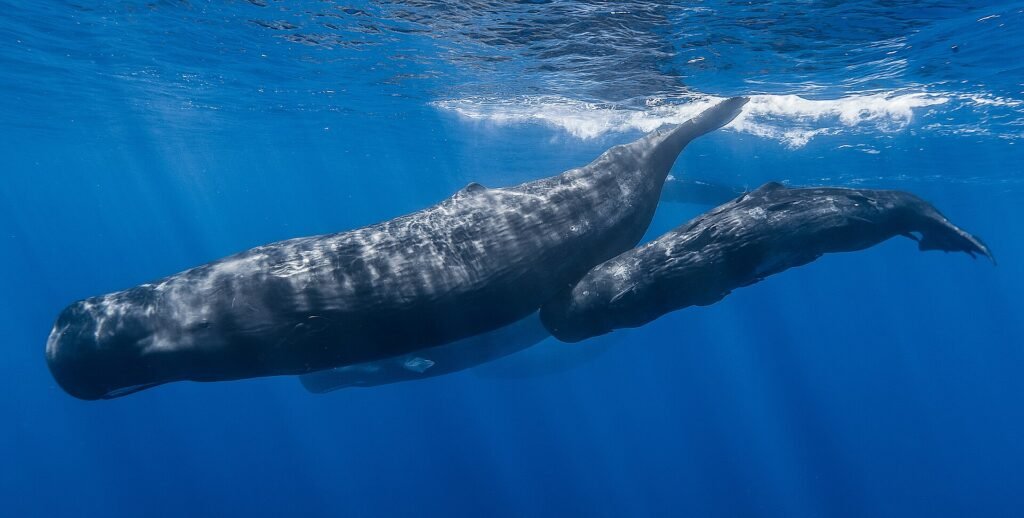

The patterns are not random. In certain rhythmic contexts, such as a coda sequence resembling “click … click … click-click-click,” the whales balanced the two coda types evenly. In others, a-codas predominated while i-codas appeared more rarely. A-codas tended to be shorter, while i-codas included both short and long variants, echoing linguistic phenomena such as vowel length distinctions that carry semantic weight in languages like Arabic or Japanese. These observations suggest deliberate control rather than mere physiological byproduct, pointing toward a combinatorial system capable of conveying richer information than previously appreciated.
Project CETI scientists have long described sperm whale codas as resembling a phonetic alphabet, with variations in rhythm, tempo, and now spectral quality creating potentially thousands of distinct combinations. Earlier work had identified an “alphabet” of roughly 143 coda types based on rhythm alone; the addition of vowel-like features dramatically expands the expressive palette. Mason Youngblood, a biologist at Stony Brook University not involved in the study, noted that such variations allow whales to pack far more information into their exchanges than a simple Morse-code analogy would suggest.
The findings build on years of fieldwork, including recordings from the Dominica Sperm Whale Project, which captured close-range “conversations” between individuals—often face-to-face in the water column. Sperm whale clans exhibit culturally distinct dialects in their codas, much like human communities maintain unique accents or vocabularies. The new vowel-like dimension suggests these cultural differences may be even more nuanced, potentially encoding identity, social relationships, or environmental information in ways that parallel human phonology.
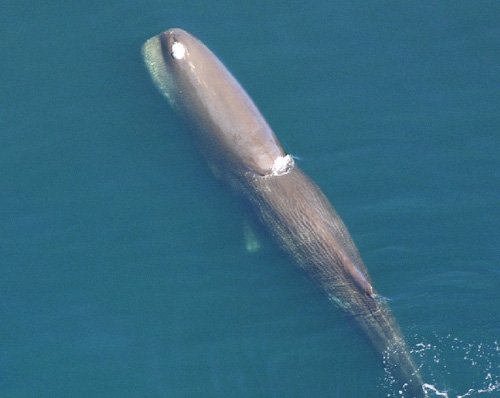

From an evolutionary standpoint, the parallels are remarkable. Humans and sperm whales last shared a common ancestor more than 90 million years ago, yet both have developed sophisticated sound-production systems capable of fine spectral control. In humans, formants arise from the shape and movement of the tongue, lips, and throat. In sperm whales, the mechanism involves air sacs and nasal structures—an independent evolutionary solution to a similar communicative challenge. This convergence hints at universal principles underlying complex vocal communication, whether the medium is air or water and whether the goal is social bonding, coordination during deep dives, or transmission of cultural knowledge.
In my view, this research represents a significant advance in our understanding of nonhuman intelligence, but it also underscores the limits of anthropocentric interpretation. Labeling the spectral variants “vowels” is a useful heuristic that highlights acoustic similarities, yet it risks overstating linguistic equivalence. We still do not know whether these coda elements carry referential meaning, function primarily as social signals, or serve some other purpose entirely. True language requires not only phonology but semantics, syntax, and the capacity for open-ended expression—attributes that remain unproven in cetaceans despite decades of study. The whales’ system may be highly complex without qualifying as language in the human sense.
Nevertheless, the discovery carries broader implications. Sperm whales are long-lived, highly social animals with large brains and evident cultural transmission. Decoding even fragments of their communication could illuminate the evolutionary roots of intelligence and the cognitive demands of life in the deep ocean. Practically, it strengthens the case for protecting these animals from threats such as ship strikes, entanglement in fishing gear, and noise pollution from seismic surveys and naval sonar, which can disrupt their acoustic environment.

Project CETI’s interdisciplinary approach—combining linguistics, machine learning, marine biology, and robotics—offers a model for future work. Advances in passive acoustic monitoring and AI-driven pattern recognition are accelerating progress, but ethical considerations remain paramount. Any attempt at “translation” must avoid interfering with wild populations or creating false expectations about interspecies dialogue.
Skeptics rightly note that many animal vocalizations once hailed as language-like have proven more limited upon closer scrutiny. Yet the accumulating evidence—from rhythmic combinatorics to now vowel-like spectral control—suggests sperm whale codas represent one of the closest nonhuman parallels to human phonology yet documented. Whether this system ultimately reveals a form of proto-language or simply a marvelously adapted social tool, it enriches our appreciation of the diversity of minds on Earth.
As researchers continue to listen beneath the waves, the sperm whale’s clicks may yet yield deeper insights into the nature of communication itself. For now, the study stands as a reminder that the ocean still holds secrets capable of challenging our assumptions about intelligence, culture, and the evolutionary creativity of life. In an age of rapid environmental change, understanding these remarkable animals is not merely an academic exercise—it is a matter of respecting and preserving one of the planet’s most extraordinary voices.